
No products in the cart.
Roll over image to zoom in
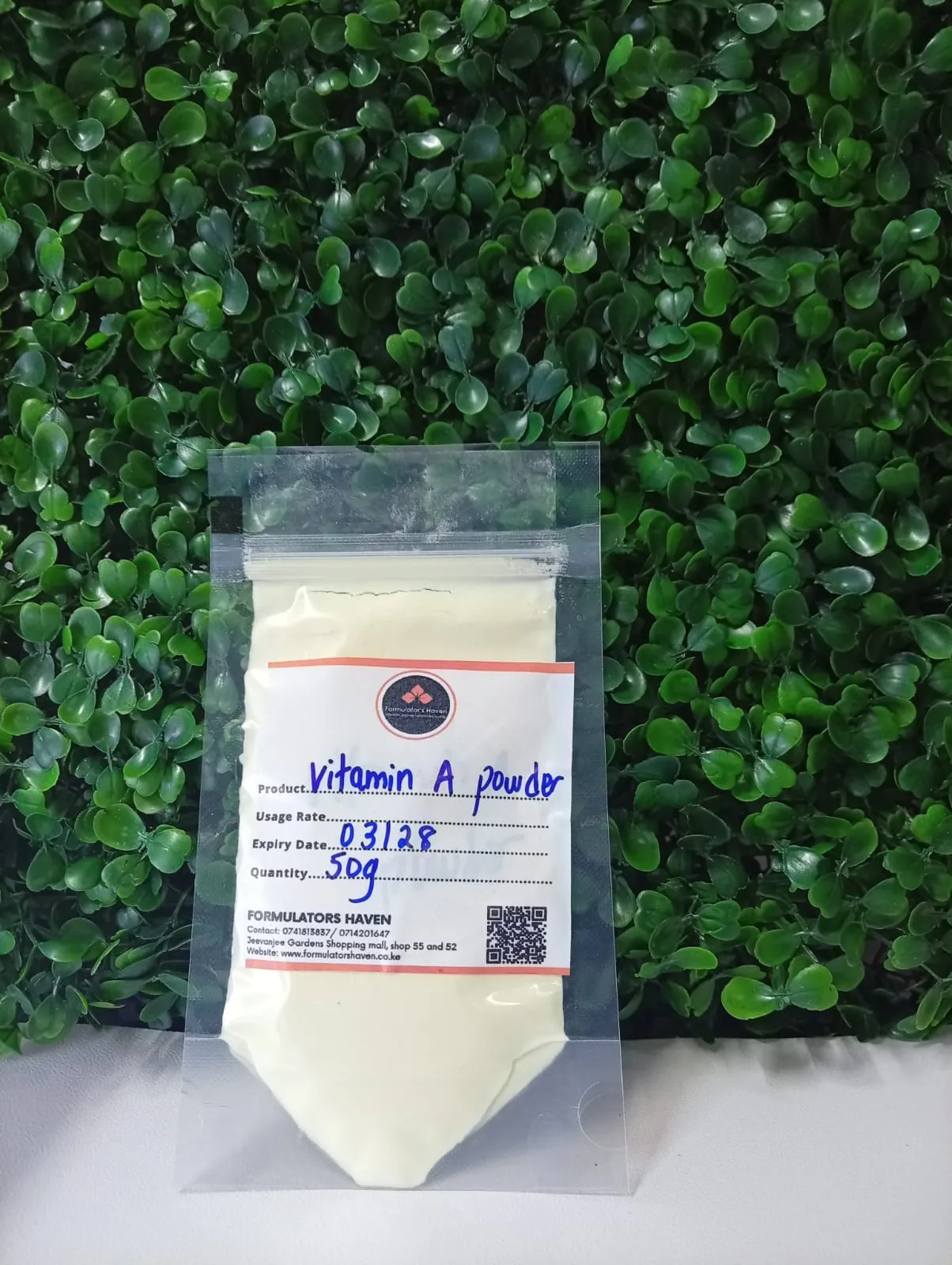
Water-Soluble Vitamin A Powder
KSh 600.00
Water-Soluble Vitamin A Powder is a cosmetic- and nutraceutical-grade form of vitamin A (retinol or its derivatives) that has been encapsulated or modified to allow dispersion in water-based formulations — something pure vitamin A normally cannot do since it’s fat-soluble.
General Overview
Property Description
- Common INCI Names: Retinyl Palmitate, Retinyl Acetate, Retinol, or Vitamin A (Encapsulated / Water-Soluble)
- Appearance: Fine white to off-white powder
- Solubility: Dispersible or soluble in water, depending on formulation type.
- Typical Concentration 0.1–1% (cosmetics); dosage varies for supplements
pH Stability Range Around 5–7 preferred
Storage Cool, dark, airtight container; sensitive to light, heat, and oxygen
Description
Water-Soluble Vitamin A Powder is a cosmetic- and nutraceutical-grade form of vitamin A (retinol or its derivatives) that has been encapsulated or modified to allow dispersion in water-based formulations — something pure vitamin A normally cannot do since it’s fat-soluble.
General Overview
Property Description
- Common INCI Names: Retinyl Palmitate, Retinyl Acetate, Retinol, or Vitamin A (Encapsulated / Water-Soluble)
- Appearance: Fine white to off-white powder
- Solubility: Dispersible or soluble in water, depending on formulation type.
- Typical Concentration 0.1–1% (cosmetics); dosage varies for supplements
pH Stability Range Around 5–7 preferred
Storage Cool, dark, airtight container; sensitive to light, heat, and oxygen
💧 How It’s Made Water-Soluble
Since vitamin A is naturally oil-soluble, cosmetic chemists modify it for water-based systems using one of the following techniques:
1. Encapsulation / Microencapsulation: Vitamin A is enclosed in a micellar shell or liposome made of phospholipids, polysaccharides, or cyclodextrins.
2. Emulsion or Solubilized Form: The vitamin A ester (e.g., Retinyl Palmitate) is dispersed with emulsifiers or surfactants to make a clear or milky dispersion.
3. Complexation with Carriers: Carriers like cyclodextrins bind vitamin A to enhance its solubility and stability.
Cosmetic Applications
Water-soluble vitamin A is used in formulations where oil-soluble forms are difficult to incorporate, such as:
- Gels and serums
- Toners and essences
- Lotions and sprays
- Sheet masks
It provides the benefits of vitamin A (cell renewal, anti-aging, smoothing, and brightening) without the greasy texture.
Formulation Tips
- Add during the cool-down phase (<40 °C) to prevent degradation.
- Protect from light and oxygen — use airless packaging if possible.
- Combine with stabilizers like Vitamin E (Tocopherol) or Ascorbic acid derivatives for enhanced efficacy.
- Works synergistically with Niacinamide, Panthenol, and Hyaluronic Acid in hydrating/anti-aging serums.
Stability & Sensitivity
Vitamin A (retinol and derivatives) is sensitive to UV light and oxidation.
Even water-soluble types degrade over time; refrigeration extends shelf life.
Avoid mixing with strong acids (AHA, BHA) at high concentrations to minimize irritation.
✅ Benefits
- Stimulates collagen production
- Promotes cell turnover
- Helps fade fine lines and hyperpigmentation
- Supports skin elasticity and smooth texture
Specification
Additional information
| Amount | 10g |
|---|
Reviews
There are no reviews yet.